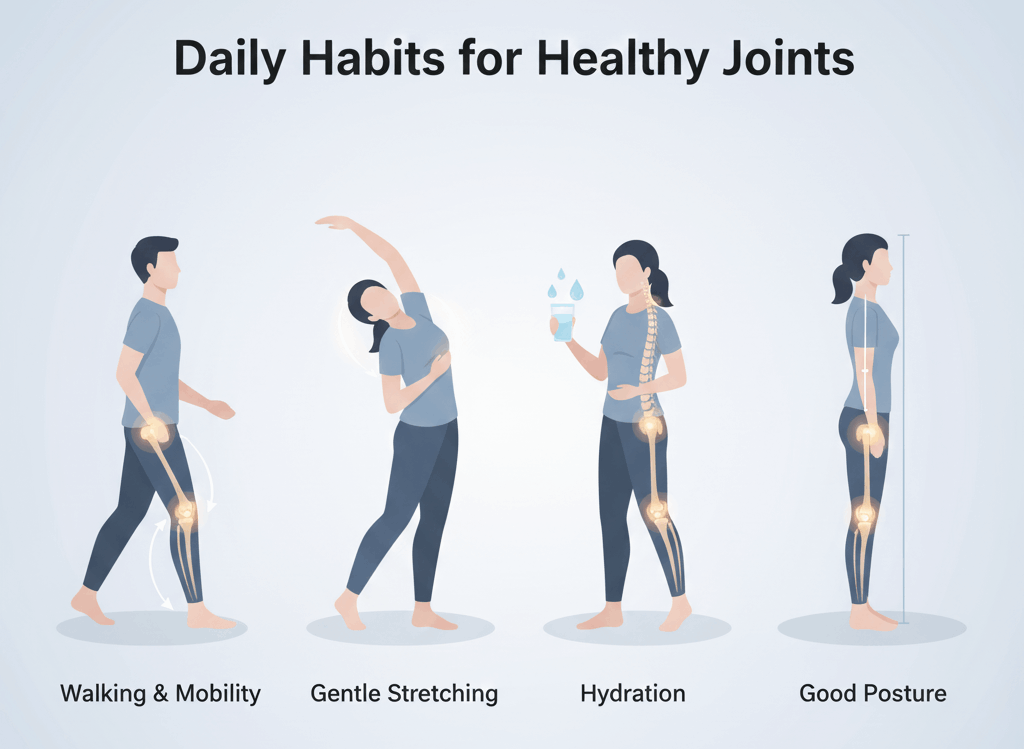
Smooth, comfortable movement is not the result of a single action or solution. Instead, it develops from consistent daily habits that support how joints move, absorb load, and recover from use. Over time, small choices related to movement, posture, hydration, and recovery can influence how flexible and responsive joints feel during everyday activities.
This guide outlines practical, evidence-aligned habits that support joint flexibility and smooth movement as part of a long-term wellness approach.
Joints are designed to move. When movement patterns become limited or repetitive, joint tissues may experience changes in lubrication, muscle balance, and load distribution. Daily habits help maintain:
Although they interact constantly, they serve very different biological purposes.
Because joints respond to use patterns, consistency matters more than intensity.
After periods of rest, such as sleep, joints may feel stiff due to reduced fluid circulation. Gentle morning movement can help reintroduce motion gradually.
Examples include:
These movements encourage synovial fluid distribution without stressing joint structures.
Low-impact activities are commonly recommended in joint-health education because they support motion while minimizing excessive load.
Activities may include:
These movements promote joint lubrication and help maintain flexibility over time.
Prolonged sitting or standing in one position can limit joint movement and contribute to stiffness. Incorporating brief movement breaks can support joint comfort.
Helpful strategies:
Regular movement encourages fluid circulation within joints.
Joint flexibility is influenced not only by movement but also by the strength of surrounding muscles. Stable joints move more efficiently and experience less unnecessary stress.
Key focus areas include:
Strength and stability help joints move through their natural range with greater control.
Hydration plays a role in overall tissue health, including structures that rely on fluid balance. While hydration alone does not “lubricate” joints, it supports normal physiological processes.
Maintaining hydration as part of daily routine contributes to:
Hydration should be considered alongside movement and nutrition habits.
Repeating the same movements daily may limit joint adaptability. Incorporating variety helps joints move through different ranges and patterns.
Examples include:
Movement variety supports flexibility and helps distribute mechanical stress.
Rest allows joints and supporting tissues to recover from daily use. Balanced recovery helps prevent overuse patterns.
Recovery-supportive habits include:
Recovery supports consistency, which is key for long-term joint flexibility.
Daily habits form the foundation of joint wellness. For some individuals, lifestyle strategies are complemented by nutritional approaches that align with joint-health goals.
Educational resources discussing joint wellness often emphasize:
For readers interested in learning how nutritional strategies fit into joint-health education, information related to joint comfort and mobility support is available on the
Joint Genesis official website.
Short movement breaks every 30–60 minutes and regular daily activity are commonly recommended to support comfortable movement.
Gentle stretching may help improve range of motion and reduce stiffness when combined with regular movement and strength support.
Yes. Over time, daily movement, posture, hydration, and recovery habits influence how joints respond to use.
No. Flexibility also depends on joint lubrication, muscle balance, stability, and movement patterns.
Smooth movement and joint flexibility are supported by daily habits practiced consistently. Gentle movement, strength, hydration awareness, recovery, and movement variety work together to support comfortable mobility over time. Rather than relying on a single action, a balanced routine offers the most sustainable approach to joint wellness.
Recommended reading:
What is synovial fluid and why it matters for joint comfort
Joint Lubrication vs Cartilage Support — What’s the Difference?
How aging affects synovial fluid and joint cushioning
Natural Compounds That Support Joint Comfort — Evidence Overview
Early Signs of Joint Wear Most People Ignore
FDA Compliance
The information on this site is for general knowledge only. It is not a substitute for professional medical advice.
Not Medical Advice: This information is not meant to diagnose, treat, cure, or prevent any disease. It has not been checked by the FDA.
Talk to Your Doctor: Always check with a healthcare professional before changing your diet, exercise, or taking new supplements. This is especially important if you are pregnant, nursing, on medication, or have a health condition.
Affiliate Links: We sometimes use affiliate links. If you buy through them, we may earn a small commission at no extra cost to you. This does not affect our recommendations.
Use this information at your own risk.