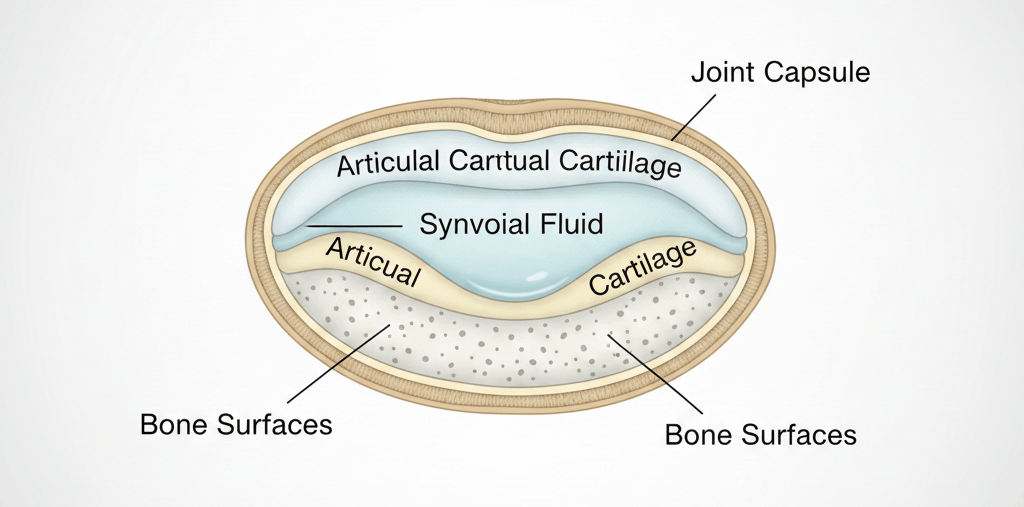
Synovial fluid is one of the most important — and least understood — components of healthy joint function. It allows the joints to move smoothly, cushions daily impact, and supports comfortable, flexible motion in everyday life. Yet most people rarely think about it until movement starts to feel less fluid, bending becomes less comfortable, or stiffness appears more often than it used to.
Understanding what synovial fluid is, how it works inside the joints, and how it changes over time can provide meaningful insight into joint comfort, mobility, and overall movement quality. This guide explains the role of synovial fluid, why it matters so much for joint function, and the ways people commonly support joint comfort as part of a daily wellness routine.
Synovial fluid is a thick, gel-like fluid found inside synovial joints — the joints that allow the body to bend, rotate, and move freely. These include the knees, hips, shoulders, elbows, ankles, fingers, and many of the joints used constantly throughout the day.
Inside each synovial joint is a small space called the joint capsule. The interior of that capsule is lined with a thin layer of tissue known as the synovial membrane, and this membrane produces synovial fluid. The fluid fills the joint space and coats the surfaces of the cartilage where two bones meet.
Although the volume of synovial fluid in any single joint is small, its role is disproportionately important. Without it, moving a joint would feel rough, unprotected, and mechanically stressful. With healthy synovial fluid, movement feels smoother, more cushioned, and more comfortable.
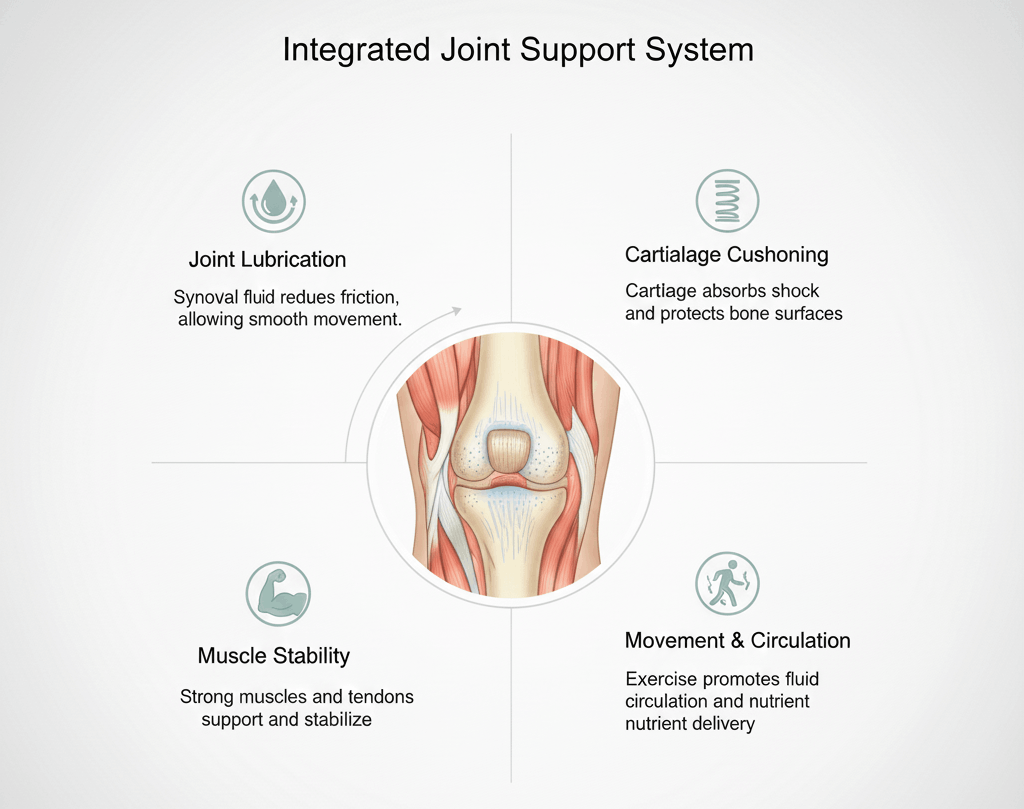
1) Lubrication for Smooth Motion
Every time a joint bends, straightens, rotates, or absorbs load, the cartilage surfaces come into contact. Synovial fluid forms a thin lubricating layer between these surfaces, helping them glide over one another with reduced friction.
This lubrication effect allows:
In simple terms, synovial fluid helps joints move more like a well-oiled hinge instead of a dry, grinding mechanism.
2) Shock Absorption and Cushioning
In addition to reducing friction, synovial fluid also acts as a natural shock absorber.
During daily activities such as:
the joints absorb varying levels of impact. Synovial fluid helps distribute this load across the joint structure, providing a cushioning effect that supports comfort during repetitive movement.
This fluid-based cushioning is especially important in weight-bearing joints such as the knees and hips.
3) Supporting Cartilage Environment
Cartilage itself does not have a direct blood supply. Instead, nutrients move into the cartilage through surrounding joint structures. Synovial fluid plays a role in maintaining the environment in which cartilage operates, helping support the conditions necessary for smooth, functional movement.
While synovial fluid is not a replacement for cartilage, it works alongside it. Cartilage provides structure and surface integrity, while synovial fluid supports lubrication and movement efficiency.
Understanding this relationship is important because joint comfort is influenced not by a single factor, but by how multiple joint components function together.
Synovial fluid contains several biological compounds that give it its unique gel-like properties.
Key components include:
These substances work together to support fluid density, lubrication efficiency, and movement comfort. The quality and viscosity of synovial fluid play a significant role in how smooth or resistant movement may feel.
The comfort and ease of joint movement depend heavily on how well synovial fluid performs its functions.
When synovial fluid is healthy and sufficiently viscous, movement tends to feel:
Conversely, when the fluid becomes thinner or less effective, the joint may not glide as smoothly. Movement may feel stiffer, the cushioning effect may be reduced, and everyday motions can begin to feel less natural than before.
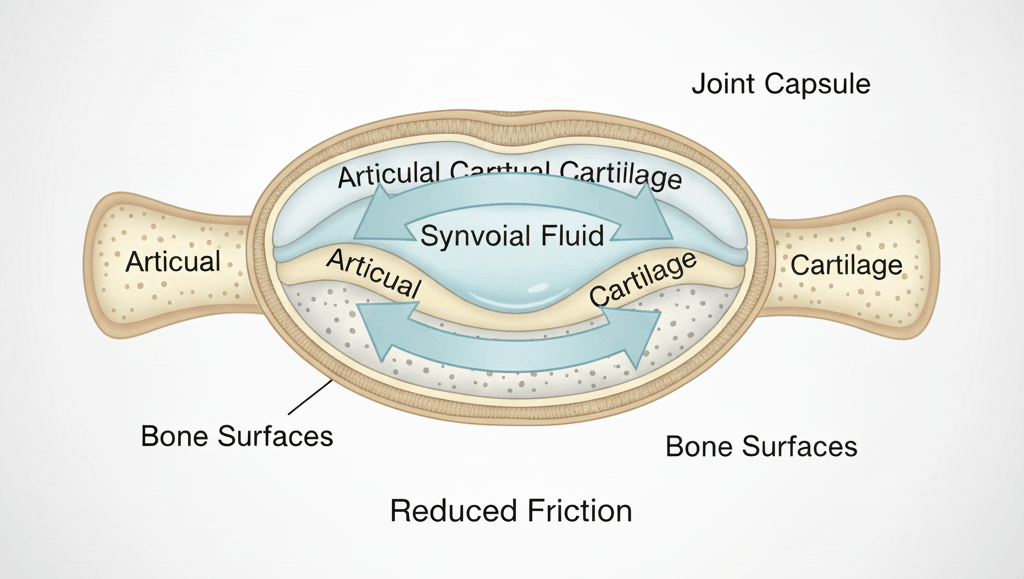
One of the primary reasons synovial fluid is essential is its ability to minimize friction within the joint. Every movement creates mechanical interaction between joint surfaces. Even small increases in friction can influence how motion feels during:
Synovial fluid acts as a boundary layer, helping the joint surfaces slide more efficiently. This reduction in friction supports comfort and smoother movement mechanics.
For readers interested in deeper distinctions between joint components, a related resource such as “Joint Lubrication vs Cartilage Support — What’s the Difference?” can be linked from this section to expand topical understanding.
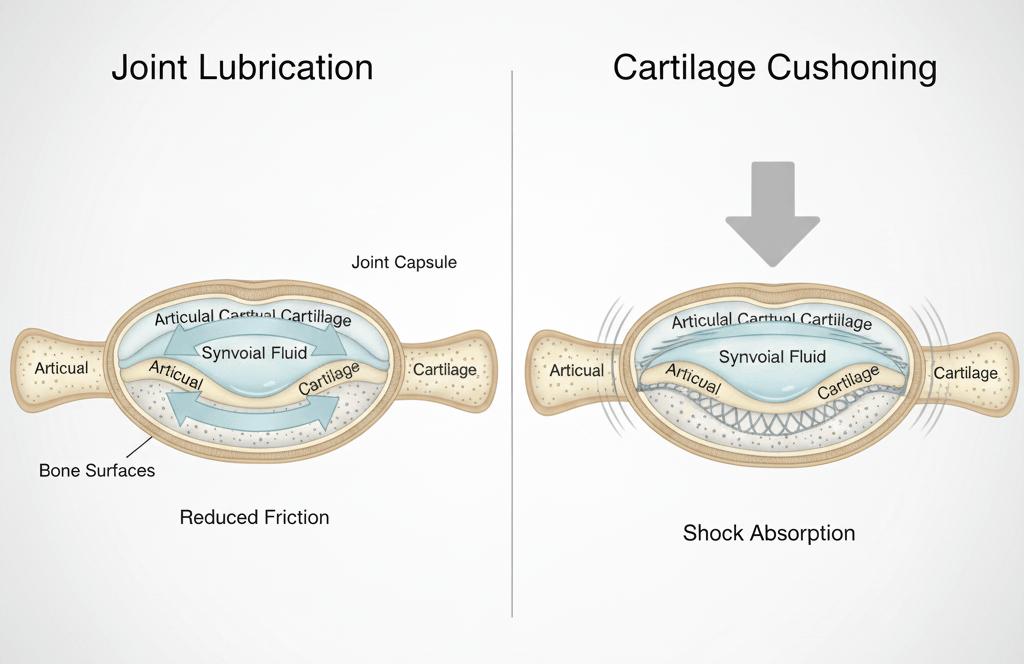
Beyond lubrication, synovial fluid supports the body’s ability to manage impact forces.
When walking, the joints experience repetitive load transfer. When climbing stairs, squatting, or standing up, the load increases temporarily. Synovial fluid helps disperse and buffer these forces so that movement remains more comfortable across different activity levels.
Joints do not operate in isolation — muscles, ligaments, cartilage, and synovial fluid all contribute to the overall movement experience. When the cushioning effect of synovial fluid is adequate, the joint environment remains more supportive of daily functional movement.
Flexibility is not only about muscle elasticity; it also depends on how freely the joints can articulate. Synovial fluid contributes to the feeling of “fluidity” in movement.
When synovial fluid maintains sufficient thickness and viscosity, joints may feel:
If synovial fluid becomes less effective, movement can feel less smooth, especially:
For readers exploring lifestyle support options, the article “Daily Habits That Support Smooth Movement and Joint Flexibility” can be internally linked here as a related resource.
Synovial fluid does not remain the same across the lifespan. Natural biological changes, movement patterns, body load, and joint stress can influence the characteristics of the fluid over time.
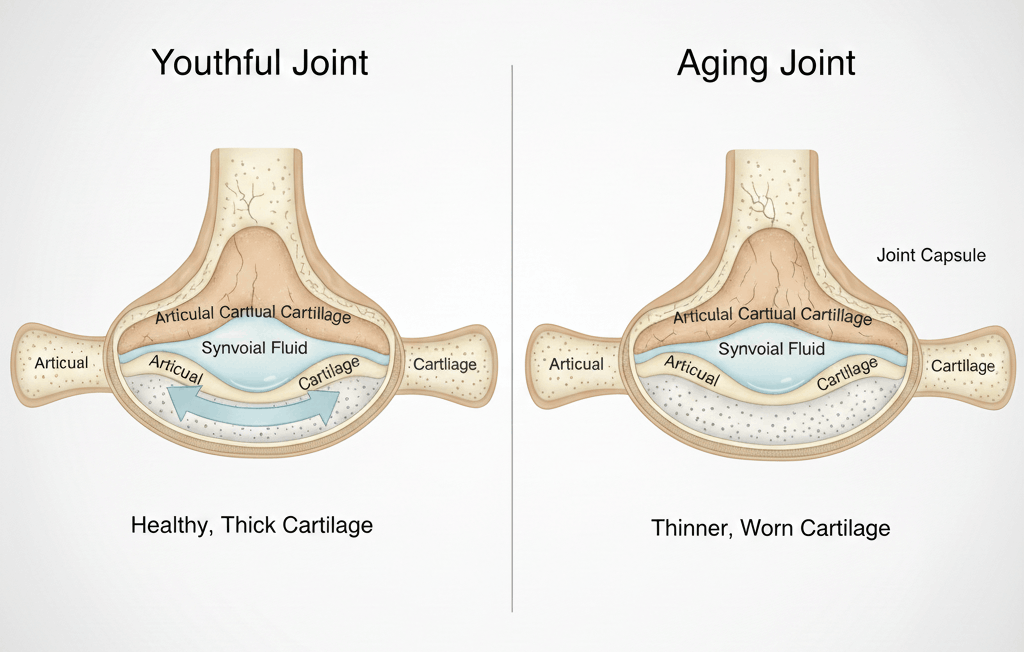
As part of the normal aging process:
When thickness or lubrication ability declines, the cushioning effect inside the joint space may feel less pronounced during motion.
This does not affect every individual in the same way, but age-related change is widely recognized as a factor influencing the comfort of joint movement.
A comprehensive overview of this relationship can be explored further in a supporting authority article such as “How Aging Affects Synovial Fluid and Joint Cushioning.”
Daily habits also play a meaningful role in how joints experience mechanical load.
Potential influences may include:
Conversely, regular light movement, mobility routines, and balanced physical activity often help support the overall joint environment and movement comfort.
Changes in synovial fluid or joint environment may occasionally be noticed through differences in how the body feels during movement. These are general observations, not medical conclusions, and experiences vary widely from person to person.
Common early changes some individuals notice include:
These sensations may result from a wide range of factors, not only synovial fluid characteristics. However, they are often associated with shifts in joint cushioning and mobility perception over time.
For a deeper exploration of early indicators, a related resource such as “Early Signs of Joint Wear Most People Ignore” can be referenced from this section as a supportive reading path.
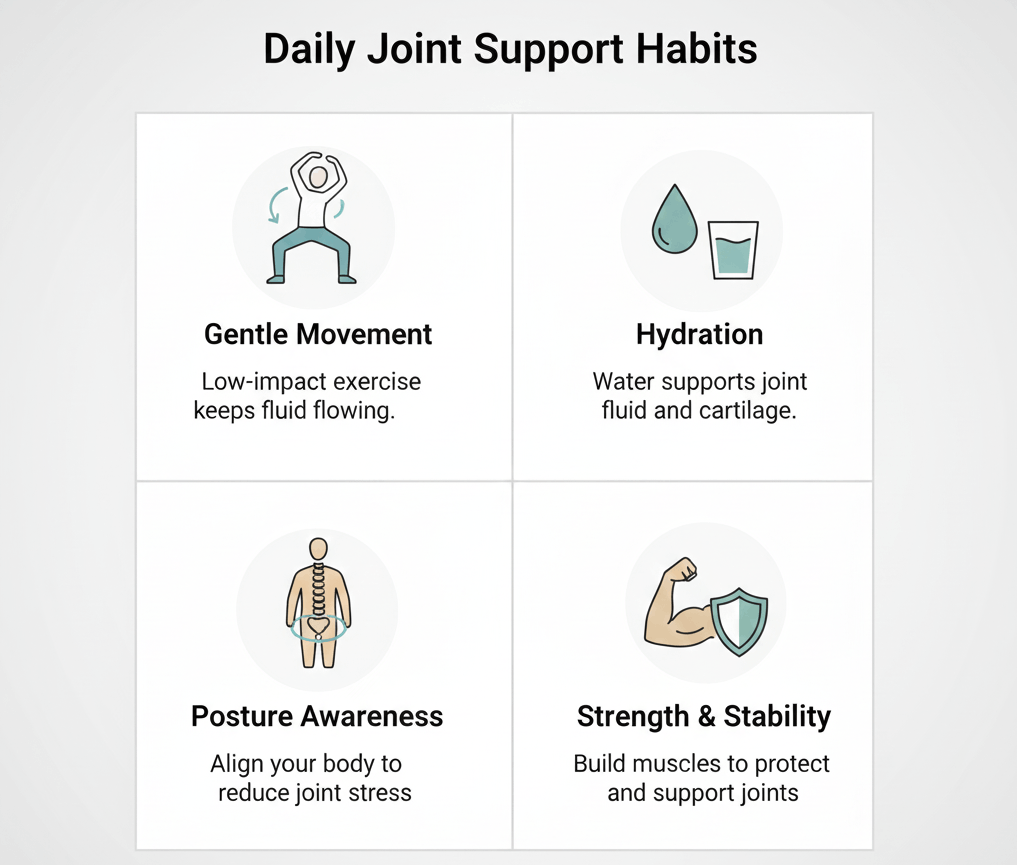
While no single factor determines joint comfort, many individuals choose to support joint health through a combination of lifestyle choices and daily wellness practices.
These approaches are commonly discussed in joint-health research and educational literature.
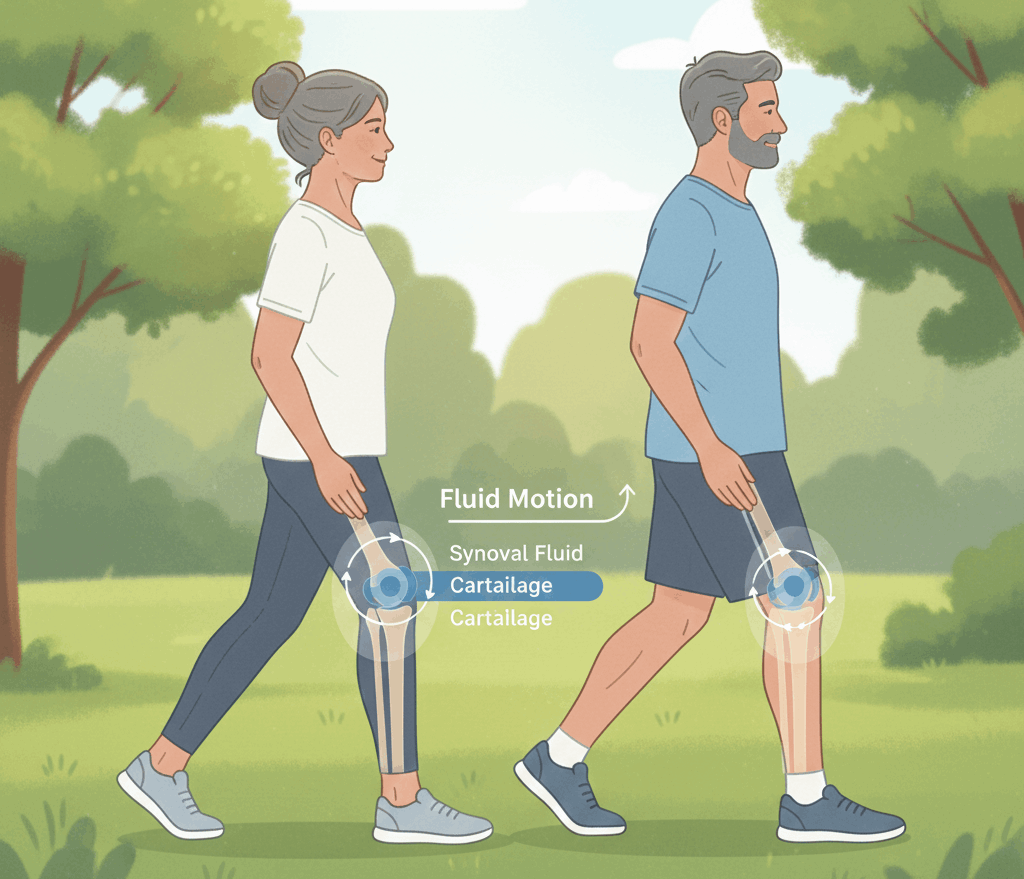
Light, regular movement helps promote joint mobility and functional comfort. Examples often include:
Movement helps distribute synovial fluid throughout the joint space, supporting natural lubrication dynamics.
In contrast, extended immobility may contribute to stiffness or decreased movement ease, especially upon resuming activity.
Because synovial fluid contains a significant water component, maintaining consistent hydration plays a role in supporting the body’s natural fluid balance. While hydration alone does not determine joint comfort, it is one of several lifestyle factors that support general physical function, including joint mechanics.
Over the years, researchers have explored various nutrients and plant compounds for their potential relevance to joint comfort and movement support. Commonly discussed categories include:
Scientific findings vary by compound and study context, but interest in nutritional support for joint comfort continues to grow.
For a structured review-style overview, readers may explore the supporting article “Natural Compounds That Support Joint Comfort — Evidence Overview.”
Some individuals choose to include joint-support supplementation as part of a broader wellness approach that already prioritizes movement, hydration, and strength-supporting habits.
In this context, supplementation is viewed as an optional adjunct intended to help support everyday comfort, flexibility, and smooth joint movement rather than a replacement for lifestyle practices or professional guidance.
Some individuals choose to incorporate joint-support supplements into their wellness approach as part of an overall strategy to support comfort, mobility, and ease of movement alongside daily lifestyle practices.
Supplements do not replace movement, hydration, or healthy habits. Instead, they are used by many people as an additional layer of support within a broader lifestyle framework focused on long-term joint wellness.
Within this context, some individuals explore nutritional formulations such as Joint Genesis, which is designed to support joint comfort, mobility, and smooth movement as part of a daily wellness routine.
The product is associated with ingredients intended to support joint function and synovial-fluid-related processes within a non-medical, lifestyle-support framework.
Readers who wish to learn more about the product, its formulation approach, and usage guidance may refer to the product information page for additional details.
Learn more about Joint Genesis
The primary role of synovial fluid is to lubricate and cushion the joints, helping reduce friction between cartilage surfaces and supporting smooth, comfortable movement during daily activities.
Synovial fluid volume and viscosity may change with age as part of natural biological processes. These changes can influence lubrication efficiency and movement comfort, although the degree of change varies from person to person.
Yes. Activity levels, hydration, movement frequency, posture, and overall physical load can influence how the joints feel during daily motion. Balanced and consistent movement often supports mobility and flexibility.
No. Cartilage is a structural tissue covering joint surfaces, while synovial fluid is the lubricating fluid that coats and cushions those surfaces. Both play complementary roles in supporting comfortable movement.
Many individuals combine light movement, posture awareness, hydration, and nutritional support as part of a broader joint-wellness approach. Some also include joint-support supplements in their routine.
Synovial fluid plays a central role in joint comfort, flexibility, and smooth movement. It lubricates the joints, cushions impact, reduces friction during motion, and supports the functional environment where cartilage operates.
Over time, natural aging and lifestyle factors may influence the characteristics of synovial fluid and the overall experience of movement comfort. Consistent light activity, balanced habits, and thoughtful wellness routines can help support joint health as part of everyday life.
For individuals interested in nutritional approaches to joint support, products such as Joint Genesis are often explored as part of a broader strategy focused on mobility and comfort. Readers may review the official product page to learn more about how the formulation aligns with joint-support goals.
visit official Joint Genesis page
FDA Compliance
The information on this site is for general knowledge only. It is not a substitute for professional medical advice.
Not Medical Advice: This information is not meant to diagnose, treat, cure, or prevent any disease. It has not been checked by the FDA.
Talk to Your Doctor: Always check with a healthcare professional before changing your diet, exercise, or taking new supplements. This is especially important if you are pregnant, nursing, on medication, or have a health condition.
Affiliate Links: We sometimes use affiliate links. If you buy through them, we may earn a small commission at no extra cost to you. This does not affect our recommendations.
Use this information at your own risk.