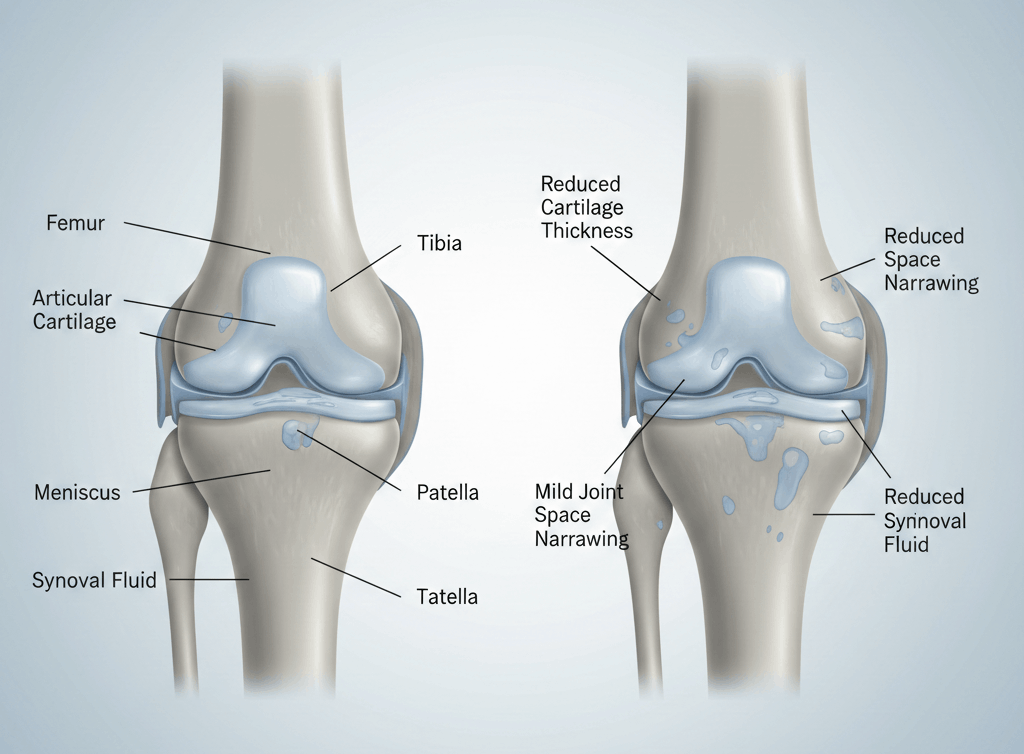
Joint wear does not usually begin with sudden or severe discomfort. In many cases, it develops gradually, with subtle signals that are easy to dismiss as normal aging, temporary stiffness, or everyday fatigue.
Understanding the early signs of joint wear can help individuals become more aware of how their joints are responding to daily movement, posture, and lifestyle habits. This article outlines commonly overlooked indicators of joint wear and explains why early awareness matters for long-term joint comfort and mobility.
Joint wear refers to gradual changes in how joints function under repeated use over time. These changes may involve:
Importantly, early joint wear is often functional rather than structural, meaning it affects how joints feel and move before any major changes are visible.
One of the most commonly ignored signs of early joint wear is mild stiffness after waking or long periods of rest.
Characteristics often include:
This pattern is often linked to temporary reductions in synovial fluid circulation during inactivity.
Occasional joint sounds are common and not always concerning. However, new or increasing joint noises may signal changes in joint mechanics.
These sensations may occur:
Such sounds can be associated with changes in lubrication, alignment, or soft tissue movement around the joint.
A subtle reduction in joint flexibility is another early sign many people overlook. This may show up as:
Over time, reduced range of motion can alter movement patterns and increase stress on surrounding structures.
Early joint wear is often associated with discomfort after activity, rather than during movement itself.
Examples include:
This pattern can reflect how joints respond to repeated loading rather than acute injury.
Some people describe early joint wear as a sensation that movement feels less fluid or less smooth than before.
This may include:
These sensations are often discussed in relation to changes in synovial fluid efficiency.
Low-grade swelling or warmth around a joint after use may also be an early signal.
Unlike acute swelling, this type:
Such responses may reflect the joint adapting to mechanical stress rather than injury.
Another often-ignored sign of joint wear is unconscious compensation, such as:
These adaptations may occur gradually and are often noticed only when someone pays close attention to their movement habits.
Many early joint wear signals are ignored because they:
However, these early indicators often reflect changes that benefit from attention and supportive habits.
Joint-health education emphasizes early awareness and consistent habits such as:
Addressing early signs does not require drastic changes but rather sustained attention to joint-friendly routines.
Some individuals explore joint-support strategies, including nutritional approaches, as part of a broader lifestyle framework focused on comfort and mobility.
These strategies are typically positioned to:
Readers interested in how joint-support education relates to daily routines may explore additional joint-comfort resources on the
Joint Genesis official website.
No. Early signs often reflect functional changes rather than damage. Awareness allows for supportive habits before issues progress.
Some stiffness is common, but persistent or worsening stiffness can indicate changes in joint lubrication or movement patterns.
Not necessarily. However, new or increasing sounds combined with discomfort may warrant attention to joint habits.
Educational sources consistently emphasize that movement, strength, hydration, and recovery play a key role in joint comfort.
Early signs of joint wear are often subtle and easy to ignore, but they provide valuable feedback about how joints are responding to daily demands. Recognizing these signals early allows individuals to support joint comfort, flexibility, and smooth movement through consistent, joint-friendly habits.
Recommended reading:
What is synovial fluid and why it matters for joint comfort
Daily habits that support smooth movement and joint flexibility
How aging affects synovial fluid and joint cushioning
Natural Compounds That Support Joint Comfort — Evidence Overview
Joint Lubrication vs Cartilage Support — What’s the Difference?
FDA Compliance
The information on this site is for general knowledge only. It is not a substitute for professional medical advice.
Not Medical Advice: This information is not meant to diagnose, treat, cure, or prevent any disease. It has not been checked by the FDA.
Talk to Your Doctor: Always check with a healthcare professional before changing your diet, exercise, or taking new supplements. This is especially important if you are pregnant, nursing, on medication, or have a health condition.
Affiliate Links: We sometimes use affiliate links. If you buy through them, we may earn a small commission at no extra cost to you. This does not affect our recommendations.
Use this information at your own risk.